
Why Won't My Dark Spots Fade? A Low-Downtime Plan for Busy Jacksonville Professionals
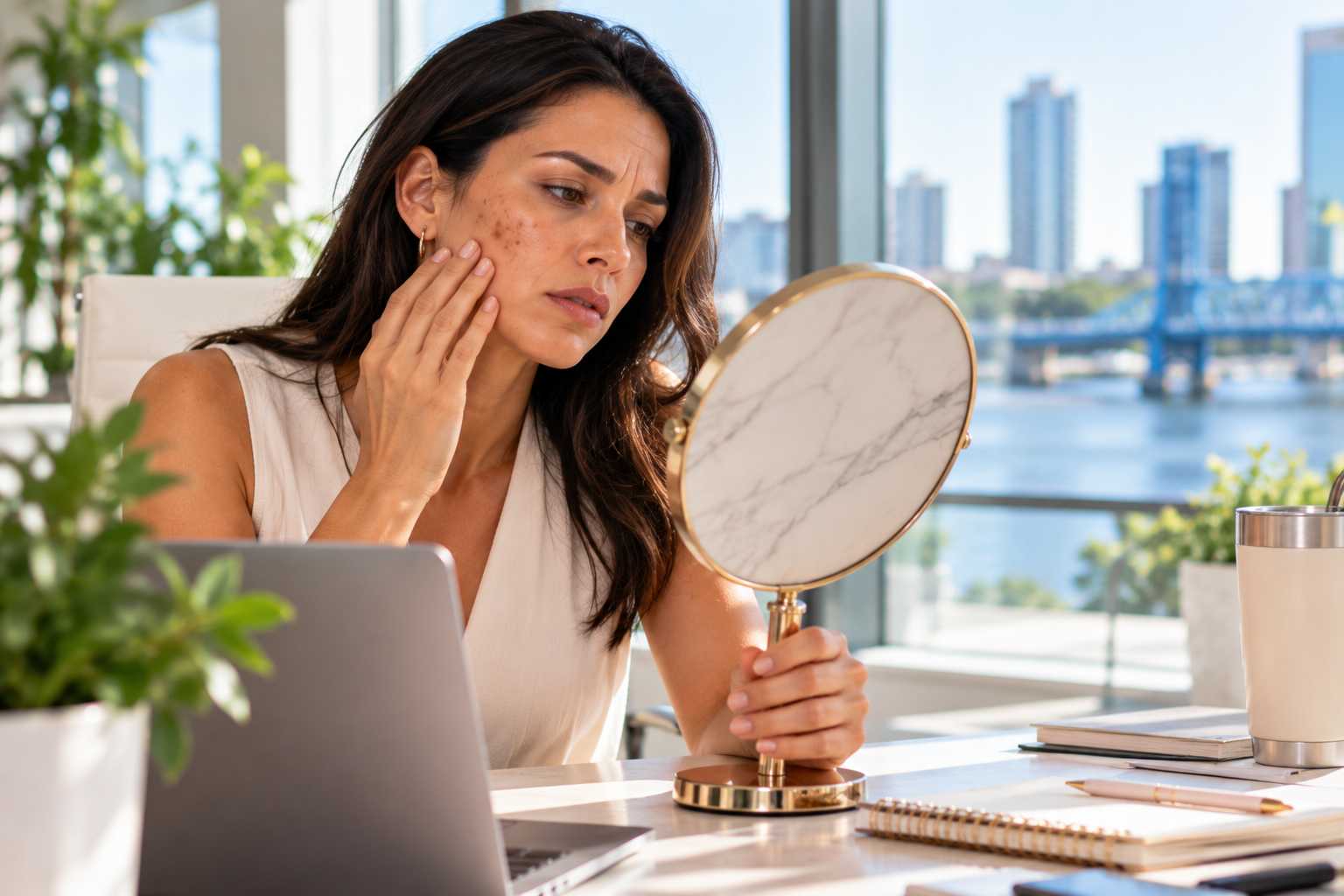
You wear sunscreen most days. You bought the vitamin C serum. You even tried the brightening pads everyone talks about. And yet those brown spots on your cheeks, forehead, and hands keep hanging around, sometimes looking darker by the end of summer.
Most stubborn dark spots on sun-exposed skin are sun spots, and they usually respond best to in-office light or laser care combined with strict daily sun protection. That matters for busy professionals in Northeast Florida who spend weekends on the golf course, the boat, or the sidelines of kids' games, then head back to the office on Monday with more pigment than before. The good news is that the right dark spot solution can work around a packed calendar. Here is what causes those spots, why they resist home care, and which treatments fit a real-world schedule.
What Causes Dark Spots on the Face?
Most dark spots on the face are caused by sun exposure, which triggers the skin to produce extra melanin. Over time, that pigment can cluster into flat brown spots often called sun spots or age spots. Other causes include acne marks, skin irritation, certain medications, and hormonal changes.
Why are dark spots so common in Jacksonville?
Jacksonville gets plenty of strong sunshine for much of the year, and many residents spend a lot of time outdoors near water and sand. MedlinePlus describes sun exposure as the greatest single factor in age-related skin changes, and that exposure adds up over every commute, beach day, and round of golf.
Why do dark spots look worse at the end of summer?
Each round of sun exposure signals pigment cells to produce more melanin, so existing spots often darken through the warmer months. In Jacksonville, where warm weather stretches well into fall, spots that seemed faint in spring can look much more noticeable by October.
Are dark spots a sign of aging?
They often show up in your 30s and 40s, but they are mainly a sign of accumulated sun exposure rather than age itself. That is why people who spent a lot of time outdoors when they were younger tend to see spots earlier.
Are All Dark Spots the Same?
No. Different types of pigment respond to different treatments, which is a big reason store-bought products disappoint. Getting the type right is the first step toward choosing a dark spot solution that actually works.
What are the common types of dark spots?
- Sun spots: flat, well-defined brown spots on sun-exposed areas
- Post-inflammatory marks: spots left behind after acne, bug bites, or irritation
- Melasma: larger, blotchy patches, often on the cheeks, forehead, and upper lip, linked to hormones and sun
- Freckles: small spots that darken in summer and lighten in winter
Melasma needs a more careful, physician-managed approach than sun spots. Our sun damage page explains how AESHA approaches each type.
When should a spot be checked by a doctor?
Any spot that changes in size, shape, or color, bleeds, itches, or looks different from your other spots should be evaluated by a dermatologist. Cosmetic treatment should only happen once a spot has been confirmed as harmless.
Why Don't Dark Spot Creams Work Faster?
Topical products can lighten pigment, but they tend to work slowly, and daily sun exposure keeps triggering new pigment while you wait. The American Academy of Dermatology notes that fading dark spots can take 6 to 12 months for discoloration a few shades darker than your skin, and longer for deeper spots.
Is sunscreen really that important?
It is the most important part of any plan. The AAD recommends a broad-spectrum, water-resistant sunscreen with SPF 30 or higher, reapplied about every two hours outdoors. A tinted sunscreen with iron oxide adds protection from visible light, which the AAD lists as another cause of dark spots.
What Is the Best Dark Spot Solution for Busy Professionals?
For people with limited time, the most practical options are in-office treatments that target pigment directly with minimal social downtime. Light and laser treatments are often the most efficient choice for sun spots, while peels and resurfacing can help with overall tone and texture. Your provider will choose based on your pigment type, skin tone, and schedule.
BBL HEROic: broadband light for sun spots
BBL HEROic uses broadband light to address sun damage, age spots, freckles, redness, and uneven tone. AESHA lists downtime as minimal, with mild redness or warmth that generally settles within a day or two. Treated spots may look darker for a short time before they fade, so many professionals schedule sessions near the end of the week.
MOXI: a gentle laser for tone and texture
MOXI is a gentle laser used for mild pigment, sun damage, uneven tone, and rough texture. Recovery is typically one to three days of mild redness and texture changes, which makes it a popular option for people who cannot disappear from meetings.
Micro Laser Peel and HALO TRIBRID for deeper renewal
When pigment comes with rough texture or fine lines, a Micro Laser Peel (about three to seven days of recovery) or HALO TRIBRID (about five to ten days) may address several concerns at once. These work best when you can plan around a lighter week.
VI Peel: a medical-grade chemical peel
The VI Peel is used for discoloration, sun damage, and uneven tone. Expect about five to seven days of visible peeling, so it is a good fit before a quieter stretch on your calendar.
Should You Choose Light, Laser, or Resurfacing?
The right choice depends on the type of pigment, your skin tone, and how much downtime you can realistically take. These technologies are not interchangeable, and not every option suits every skin tone, so your provider selects the device and settings after evaluating your skin.
What does laser resurfacing actually mean?
When people research laser resurfacing, they often find very different treatments under one label. Some lasers remove outer layers of skin and require a week or more of healing, while others are gentler with shorter recovery. AESHA offers a range of skin resurfacing options, including Contour TRL and CO2 laser resurfacing, both of which typically involve about 7 to 14 days of recovery and are reserved for more advanced concerns. If you are weighing a peel against a laser, our article on skin resurfacing vs. chemical peels breaks down the differences.
How many treatments will you need?
Many of these treatments work best as a series. Your provider will recommend a schedule based on your skin's response, often followed by periodic maintenance to keep new spots in check.
How Do You Keep Dark Spots From Coming Back?
New spots can form if sun exposure continues unchecked, so prevention is part of every plan. Daily sunscreen, a wide-brimmed hat for weekends outdoors, and a nightly routine with products your provider recommends all help protect your results.
Scheduling treatments in fall and winter is also a smart move in Jacksonville. Sun exposure tends to be lower, and your skin has time to heal before beach season returns. A skin analysis can track your progress and reveal pigment that has not surfaced yet.
Frequently Asked Questions
What is the fastest dark spot solution?
For well-defined sun spots, light-based treatments like BBL HEROic are often among the quickest options with minimal downtime. Results vary, and many people need more than one session.
Can dark spots be removed permanently?
Treated spots can fade significantly, but new spots can form with future sun exposure. Daily SPF and periodic maintenance help keep results looking their best.
Is laser treatment safe for darker skin tones?
Some devices and settings carry a higher risk of irritation or new discoloration in deeper skin tones. A provider should evaluate your skin type before recommending any light or laser treatment.
How much downtime should I expect?
Downtime ranges from minimal with BBL HEROic, to one to three days with MOXI, to about one to two weeks with deeper resurfacing like CO2. Your provider can match the treatment to your schedule.
When is the best time of year to treat dark spots in Jacksonville?
Fall and winter are ideal, since sun exposure is usually lower and healing skin is easier to protect.
Spot On: Your Calendar and Your Complexion Can Get Along
Dark spots do not have to be a permanent part of your Florida lifestyle, and you do not need to clear your calendar to treat them. With the right diagnosis, a plan built around your schedule, and steady sun protection, clearer-looking skin is a realistic goal.
Explore our uneven skin tone and texture solutions or start with an aesthetic consultation at AESHA Medical Aesthetics on Southpoint Parkway in Jacksonville.