
Fat Grafting
Fat Grafting for the Face, Neck, Decolletage and Hands
Minimally invasive fat transfer performed awake, under local anesthesia, in our Jacksonville office.
No general anesthesia. No operating room. No hospital stay.
.jpg)
Your Fat Grafting Procedure, Step By Step
Your treatment begins with a personalized evaluation and continues through a precise process of harvesting, preparing, and placing your own fat.
Here’s what you can expect throughout your appointment.
Step 1. Consultation
Dr. Azam evaluates your facial structure, skin quality, and areas of volume loss, and identifies a suitable donor site. Not every patient is a candidate, and you will be told directly if you are not.
Step 2. Numbing
The donor site and treatment areas are numbed with local anesthetic. This is the only discomfort most patients report, and it is brief.
Step 3. Harvest
A small volume of fat is collected through a fine cannula, usually from the abdomen, flank or inner thigh. Entry points are a few millimeters. This is a micro-harvest, not liposuction, and it is not intended to change the shape of the donor area.
Step 4. Processing
The fat is purified to separate viable adipose tissue from fluid and oil. Depending on your treatment plan, the graft may be processed into finer fractions for superficial placement in areas like the decolletage.
Step 5. Placement
The prepared fat is layered in small aliquots through micro-cannulas. Placing it in many fine passes rather than a few large deposits is what gives the graft access to blood supply and improves how much of it survives.
Step 6. Recovery
You go home the same day. Swelling and bruising are expected and typically peak within the first several days.
%202%20(1).avif)
Treatment Areas
Face
Volume loss in the midface, temples, under-eye hollows, cheeks, jawline and chin is one of the earliest structural signs of aging.
Facial fat grafting rebuilds that foundation rather than simply filling the lines it creates. Finely processed fat can also be used superficially to improve skin quality, texture and tone.
Neck
The neck thins and loses support over time, making cords and banding more visible. Carefully layered fat softens contour irregularities and improves the quality of the overlying skin.
Decolletage
The chest is one of the most sun-exposed and most neglected areas of the body. Crepey texture and fine vertical lines across the decollete respond well to superficial fat grafting, which adds both cushion and skin quality improvement.
Hands
Hands reveal age faster than almost any other area. As the fat pads on the back of the hand atrophy, tendons, veins and bony contours become prominent.
Fat grafting restores that lost cushion, softening the appearance of tendons and veins and improving skin quality at the same time.
.jpg)
Fat Grafting or Dermal Filler?
Both restore volume. They are not interchangeable.
Dermal filler is immediate, predictable, requires no downtime, and can be dissolved if you change your mind. It is the better choice for targeted correction, for a first-time patient, and for anyone who wants a reversible option.
Fat grafting is a larger commitment with real downtime, and the amount that survives varies between patients. In exchange, it can address volume loss across broad areas in a single session, it uses your own tissue, and the result is durable rather than scheduled for replacement.
Many patients at Aesha use both. Dr. Azam will tell you honestly which one serves your goals, and will say so if the answer is neither.
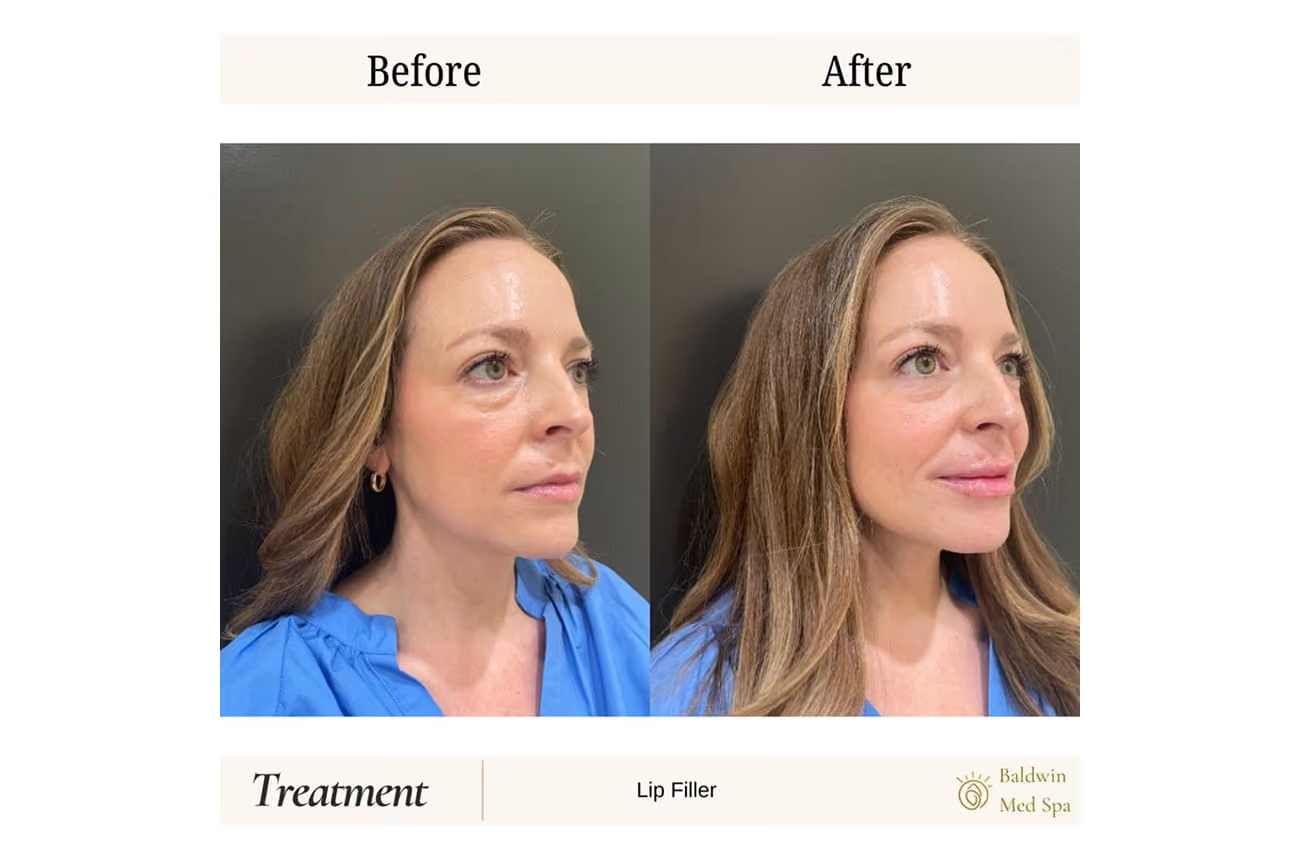
Before & After Results
%20(1).avif)
%20(1).avif)
%20(1).avif)
%20(1).avif)
%20(1).avif)
Fat Grafting Without General Anesthesia
Fat transfer has historically been treated as a surgical procedure requiring sedation, an operating room, and a recovery period measured in weeks. Advances in micro-harvesting technique have changed that.
Using fine cannulas and tumescent local anesthesia, the fat is collected through entry points so small they typically require no sutures. You remain awake and able to communicate throughout. Most patients drive themselves home.
Performing the procedure awake carries real advantages beyond convenience. You avoid the risks associated with general anesthesia entirely. And because you are upright and responsive, placement can be assessed in a natural position rather than lying flat on a table.
Recovery & Results
Fat grafting involves healing at both the donor and treatment areas. Knowing what to expect during recovery can help you plan ahead while your transferred fat settles and your final results gradually take shape.
.jpg)
Before your fat grafting procedure, Dr. Azam will evaluate the areas you would like to treat and determine an appropriate donor site, commonly the abdomen, flank, or inner thigh. Be prepared to discuss your medical history, current medications, previous treatments, and your goals during your consultation. Follow any personalized instructions provided by Aesha Medical Aesthetics leading up to your appointment to help prepare for your procedure.

Swelling and bruising are expected at both the donor and treated areas following fat grafting. Swelling may be most noticeable during the first several days, and many patients feel comfortable returning to normal activities within five to seven days, although some residual facial swelling can last longer. Your treated areas may initially appear fuller as swelling settles and a portion of the transferred fat is naturally reabsorbed. Final results are typically evaluated around three to six months after treatment.
Any Questions?
No. Only a very small volume of fat is collected, through entry points a few millimeters wide, purely to obtain graft material. It is not body contouring and it is not intended to change the shape of the donor area. If your goal is body contouring, this is not the right procedure and you will be referred.
Not at Aesha Medical Aesthetics. The procedure is performed in our Jacksonville office using local anesthesia. You remain awake and comfortable throughout, and most patients drive themselves home.
The numbing is the least comfortable part and it is brief. Once the local anesthetic takes effect, most patients report pressure rather than pain.
Most commonly the abdomen, flank, or inner thigh. The donor site is selected during your consultation based on where the tissue is most suitable.
The fat that successfully establishes a blood supply is long lasting and behaves like the native tissue around it. Unlike hyaluronic acid filler, it does not dissolve on a set schedule. Your face will continue to age normally.
Yes. Hand rejuvenation is one of the most rewarding applications. Restoring the fat pads on the back of the hand softens the appearance of prominent tendons and veins.
The core principle is the same. The difference is setting and scale. This is an in-office, awake, micro-volume procedure for facial and small-area volume restoration. It is not large-volume surgical fat transfer, and it is not performed for the buttocks, breasts or other body areas.
Not all of it. A portion is reabsorbed over the first several months, which is why the final result is assessed at three to six months rather than immediately. The amount varies between patients and between treatment areas.
Frequently. Many patients pair fat grafting with laser resurfacing or neurotoxin as part of a longer term plan. Sequencing is discussed at consultation.
Often yes. The volumes required for facial, neck, decolletage and hand grafting are small. Dr. Azam will assess available donor tissue at your consultation and tell you directly if there is not enough to work with.
Plan for five to seven days before you feel comfortable in public, with swelling and bruising during that window. Residual swelling in the face can persist for a few weeks.

Expertise Behind Every Graft
Fat grafting is a technique-dependent procedure. How the tissue is harvested, how it is processed, and how it is layered determine how much of it survives and how natural the result looks.
Every fat grafting procedure at Aesha Medical Aesthetics is performed by Rubina Azam, MD, a physician double fellowship trained in aesthetic and anti-aging medicine, with advanced training in awake fat grafting technique.