
Why Does Skin Lose Its Firmness, and What Can Be Done Without Surgery?
Updated August 2026.
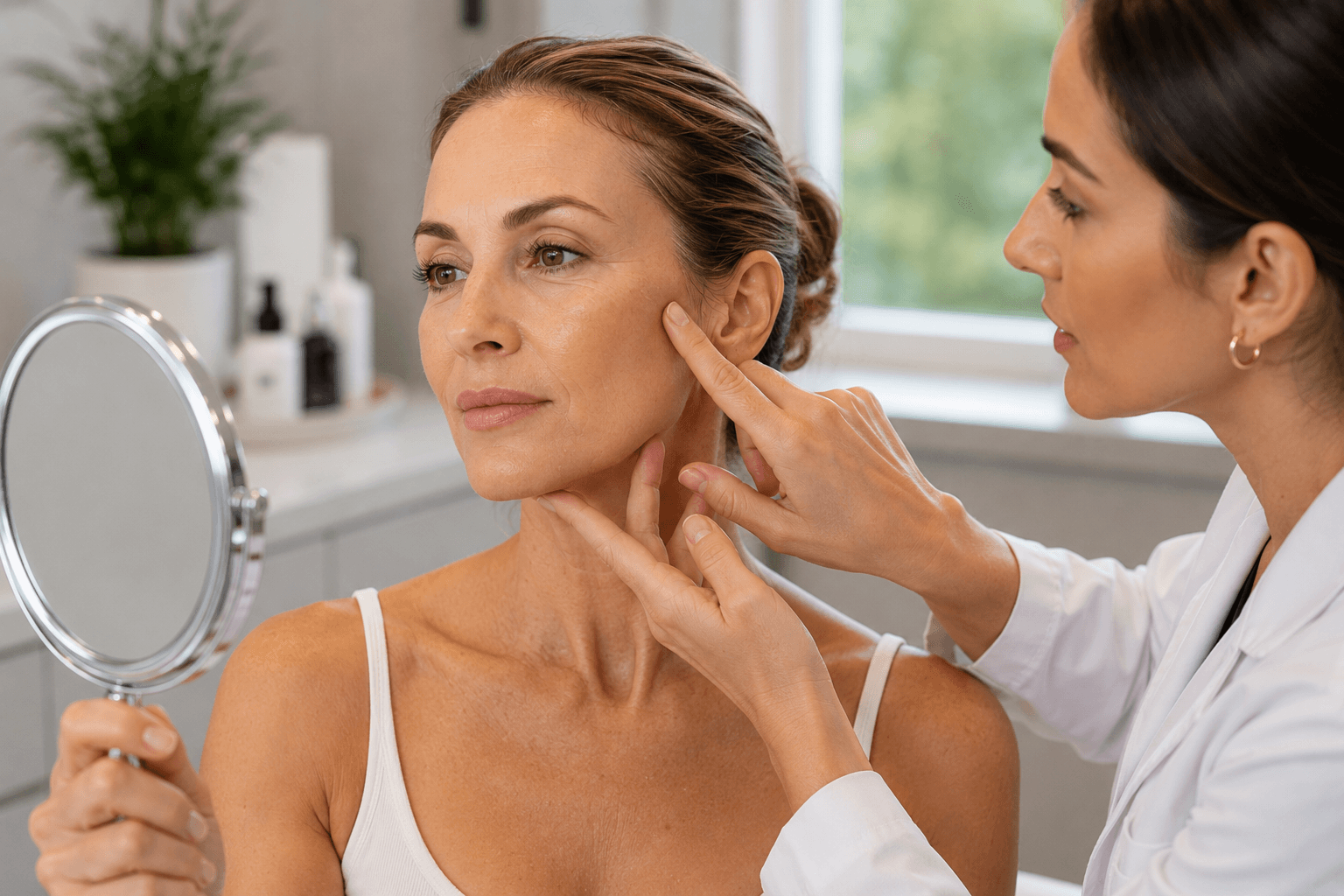
There's a particular moment a lot of people describe when talking about aging skin: catching their jawline or neck in a certain light and thinking it looks a little less defined than it used to. That softening, often described as loose skin or skin laxity, is one of the more common concerns brought up during consultations, and one of the first questions that usually follows is whether surgery is really the only fix. The good news is, it isn't. Skin tightening has become a genuinely effective non-surgical option for a lot of people dealing with early to moderate laxity.
What Causes Skin to Lose Elasticity and Firmness Over Time?
Skin's firmness relies heavily on collagen and elastin, two proteins that give skin its structure and its ability to bounce back into place. Starting in our mid-twenties, natural collagen production begins to slow gradually, and by the time we reach our forties, that decline becomes more noticeable. Add in the effects of sun exposure, which breaks down existing collagen fibers, along with factors like weight fluctuation, smoking, and simply genetics, and skin can lose its elasticity faster than expected.
Jacksonville's sunny climate plays a meaningful role here as well. Consistent UV exposure over the years accelerates collagen breakdown, which is part of why skin laxity often shows up a bit earlier for people who've spent a lot of time in the Florida sun without consistent protection.
What Are the Early Signs of Skin Laxity?
Early signs of laxity are often subtle at first. A slightly less defined jawline, mild sagging along the cheeks, or skin on the neck that looks a bit less taut than it used to are common early indicators. Some people also notice their skin doesn't "snap back" as quickly after stretching, a small but telling sign that elastin levels have started to decline.
Is It Normal in Your 40s, or a Sign to Act Sooner?
Some degree of skin laxity is a completely normal part of aging, and most people start noticing it somewhere between their late thirties and mid-forties. That said, "normal" doesn't mean there's nothing to be done about it, and noticing early signs is actually a good opportunity to address them before they become more pronounced. Waiting doesn't cause harm, but earlier intervention with non-surgical treatments tends to work with less dramatic laxity, often producing more subtle, natural-looking improvement.
Can Skin Tightening Treatments Replace a Surgical Lift?
This depends heavily on the degree of laxity involved. For mild to moderate skin laxity, non-surgical skin tightening treatments can produce meaningful improvement without the downtime, cost, or permanence of surgery. For more significant, advanced sagging, particularly involving excess skin rather than just reduced elasticity, surgical options may ultimately produce more dramatic results than non-surgical treatment alone.
For many patients, though, especially those catching early signs of laxity, non-surgical treatment offers a genuinely effective middle ground, tightening and firming skin gradually through the body's own collagen-building response rather than surgically removing tissue.
How Does the TRL Laser Tighten Skin Without Downtime?
One of the more effective tools used for non-surgical skin tightening is the TRL, or Tunable Resurfacing Laser, which delivers precise laser energy to stimulate collagen remodeling beneath the skin's surface. Because the settings can be adjusted based on the specific area and level of laxity, treatment can be tailored fairly precisely to individual needs, whether that's the jawline, cheeks, or neck.
The Contour TRL treatment specifically is often used for patients looking to address skin laxity along with texture concerns in the same session, since the collagen-building process benefits both at once. Most patients experience some redness and mild swelling for a few days following treatment, considerably less downtime than what's typically associated with surgical procedures.
Who Is a Good Candidate for Non-Surgical Skin Tightening in Jacksonville?
Good candidates for non-surgical skin tightening are generally those with mild to moderate loose skin or skin laxity, rather than significant excess skin that would require surgical removal. It's a popular option among patients in their thirties and forties who are noticing early changes and want to address them proactively, though it can also benefit older patients whose laxity remains in the mild to moderate range.
A skin tightening consultation typically starts with an honest assessment of where your skin currently stands, since setting realistic expectations upfront makes a big difference in how satisfied patients are with their results. For patients specifically in their forties navigating these changes, it can also help to review broader skin wellness solutions for your 40s to understand how tightening fits alongside other treatments you might be considering.
Frequently Asked Questions
How many skin tightening sessions are typically needed? Most patients see the best results from a series of three to four sessions spaced several weeks apart, allowing collagen to rebuild gradually between treatments.
Is skin tightening painful? Most patients describe the sensation as warm rather than painful, and a cooling mechanism is often used during treatment to keep it comfortable.
How soon will I see results? Because skin tightening relies on gradual collagen remodeling, initial improvement is often visible within a few weeks, with continued tightening over the following two to three months.
Can skin tightening be combined with other treatments? Yes, it's commonly paired with treatments addressing volume loss or texture, since laxity, volume, and texture concerns often overlap as skin ages.
Firming Up Your Options
Loose or sagging skin doesn't automatically mean surgery is the only path forward. For a lot of people catching early to moderate signs of laxity, non-surgical skin tightening offers a genuinely effective way to restore firmness while working with the body's own natural collagen-building process. If you've been noticing your jawline or neck looking a little less defined, a consultation is the best way to find out exactly where your skin stands and what realistic options look like for you here in Jacksonville.