


Can Microneedling Really Improve Acne Scars and Uneven Skin Texture?
Updated August 2026.
Acne can feel like it takes up temporary residence on your skin and then leaves without fully moving out. Long after breakouts clear up, the marks they leave behind, whether that's pitted scarring, rough texture, or patches of uneven tone, can stick around for years. If you've tried creams, serums, and every "miracle" product on the shelf with little to show for it, you're probably wondering if there's actually something that works on a deeper level. That's where microneedling comes into the conversation.
What Causes Acne Scars and Uneven Skin Texture?
Acne scars form when inflammation from a breakout damages the collagen structure beneath the skin. As the skin heals, it doesn't always rebuild collagen evenly, which is why some areas end up with depressed, pitted scarring while others might develop raised or thickened tissue. Uneven texture more broadly can also result from sun damage, clogged pores, dead skin buildup, or simply the natural slowing of skin cell turnover as we age.
Jacksonville's warm, humid climate adds another layer to this. Higher humidity can contribute to clogged pores and breakouts for some skin types, while year-round sun exposure can make existing scars and texture more noticeable by increasing contrast between damaged and undamaged skin.
Why Do Some Scars Fade While Others Stay Raised or Pitted?
The type of scarring depends largely on how the body responds to the original inflammation. Pitted or "ice pick" scars occur when collagen production during healing falls short, leaving a depressed area. Raised or hypertrophic scars happen when the body overproduces collagen during healing. Shallow textural unevenness, without a clearly defined scar, is often more related to long-term sun damage or slower cell turnover rather than a single breakout event.
This is part of why a one-size-fits-all approach rarely works well for scarring. Treatment needs to match the specific type of texture concern, which is exactly where a personalized approach to microneedling comes in.
How Does Microneedling Stimulate Collagen to Smooth Skin?
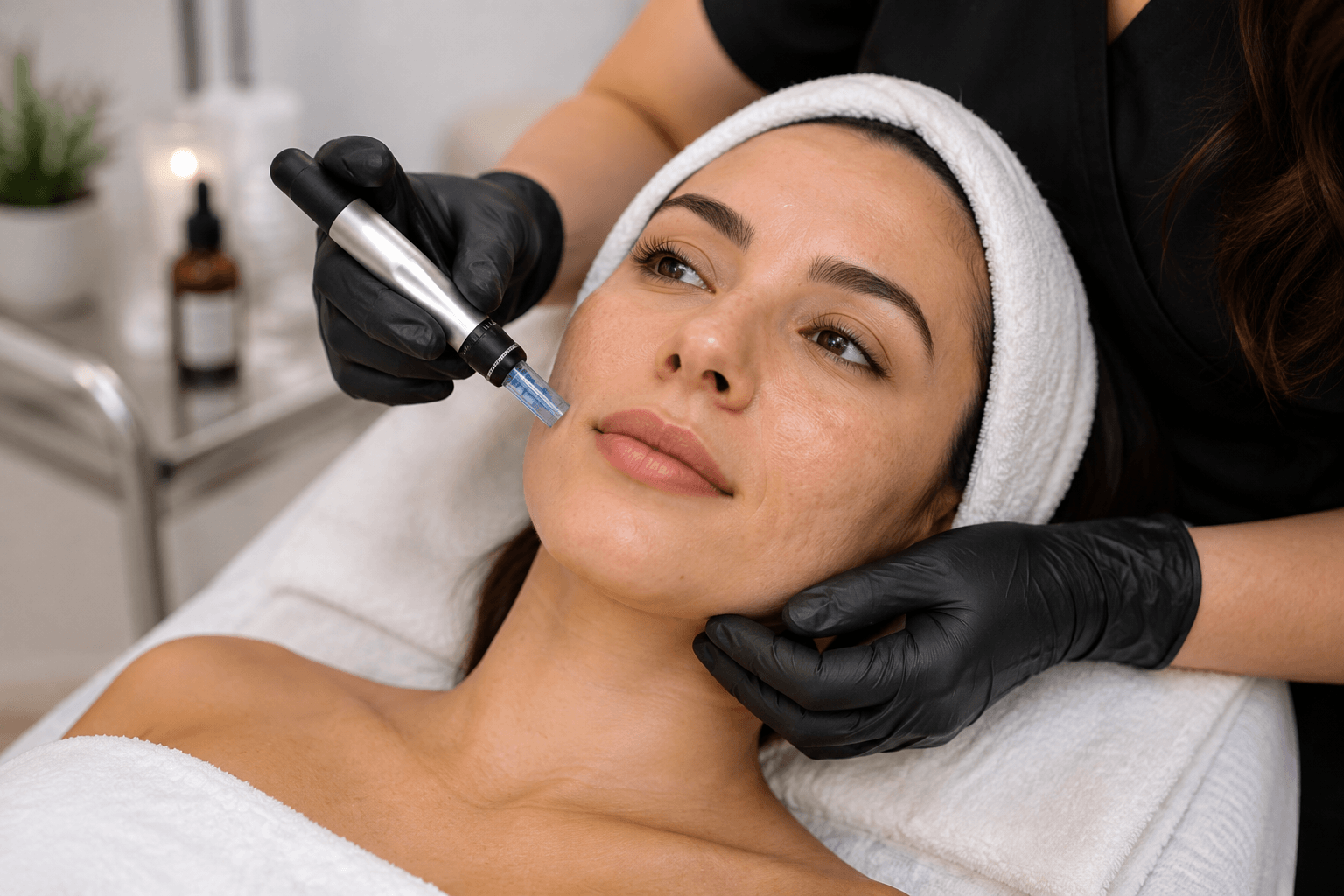
Microneedling works by creating controlled, microscopic punctures in the skin using fine needles. These tiny injuries trigger the body's natural wound healing response, which includes new collagen and elastin production. Over the following weeks, this rebuilding process gradually smooths pitted scarring, improves overall texture, and can help even out skin tone as new, healthier skin cells replace damaged ones.
Because the process relies on the body's own healing mechanisms rather than removing layers of skin outright, it tends to involve less downtime than more aggressive resurfacing options, while still delivering meaningful improvement over a series of sessions.
What's the Difference Between Microneedling and SkinPen Treatments?
SkinPen is a specific, FDA-cleared microneedling device designed to deliver consistent needle depth and precision throughout treatment. While "microneedling" refers to the broader category of treatment, SkinPen is a refined version of that approach, often chosen for its consistency and control, particularly when treating more sensitive areas or working on specific scar patterns.
How Many Microneedling Sessions Are Needed to See Results?
Most patients need a series of treatments, typically spaced about four to six weeks apart, to see meaningful improvement in scarring and texture. This spacing allows the skin time to rebuild collagen between sessions rather than compounding irritation. Many providers recommend an initial series of three to six treatments depending on the depth and type of scarring, followed by occasional maintenance sessions to sustain results over time.
Patience matters here. Because microneedling relies on gradual collagen remodeling rather than an immediate resurfacing effect, visible improvement tends to build steadily over the weeks and months following each session rather than appearing all at once.
Who Is a Good Candidate for Microneedling in Jacksonville?
Microneedling tends to work well for a broad range of skin tones and types, which is one reason it's such a popular option for acne scarring specifically, since some more aggressive laser treatments carry more risk for certain skin tones. Good candidates are generally dealing with mild to moderate scarring, uneven texture, or early textural sun damage, without active, inflamed acne at the time of treatment.
If your main concern is specifically acne and acne scarring, a treatment plan built around microneedling can be tailored to your scar pattern and skin type. For patients dealing more broadly with uneven skin tone and texture beyond just acne scarring, the same underlying collagen-building process applies, though the treatment plan may look slightly different depending on the cause. A starting aesthetic consultation is typically the best way to map out which approach fits your skin specifically.
Frequently Asked Questions
Does microneedling hurt? Most patients describe the sensation as mild discomfort rather than pain, and a topical numbing cream is typically applied beforehand to keep the treatment comfortable.
How long is recovery after microneedling? Downtime is generally minimal, with redness similar to a mild sunburn lasting one to three days. Most patients return to normal activities the following day.
Is microneedling better than chemical peels for acne scars? It depends on the type of scarring. Microneedling tends to work especially well for pitted or textural scarring since it rebuilds collagen from within, while peels work more on the surface layer of skin.
Can microneedling help with more than just acne scars? Yes. It's also commonly used for general texture concerns, enlarged pores, and early signs of sun damage or fine lines.
Turning Old Scars Into Old News
Acne scarring and uneven texture don't have to be a permanent souvenir from breakouts long past. With a treatment that works by rebuilding your skin's own collagen rather than just masking the surface, meaningful improvement is very much within reach. If you've been living with texture concerns that products alone haven't touched, a consultation is the natural next step toward a smoother, more even complexion here in Jacksonville.